The pharmaceutical industry is one of the most important branches of industry in terms of the healthcare sector.
It is responsible for the production of active ingredients and intermediates for the synthesis of active ingredients using a large number of manufacturing processes. These are used, among other things, for the manufacture of finished medicinal products, blood preparations, sera, vaccines, in-vivo diagnostics, allergen preparations and medicinal products for advanced therapies (e.g. gene therapeutics, somatic cell therapeutics, biotechnologically processed tissue products).
In addition to the resulting production waste water, cooling water or rainwater from roofs, roads, production areas, transshipment points or tank farms play an important role.
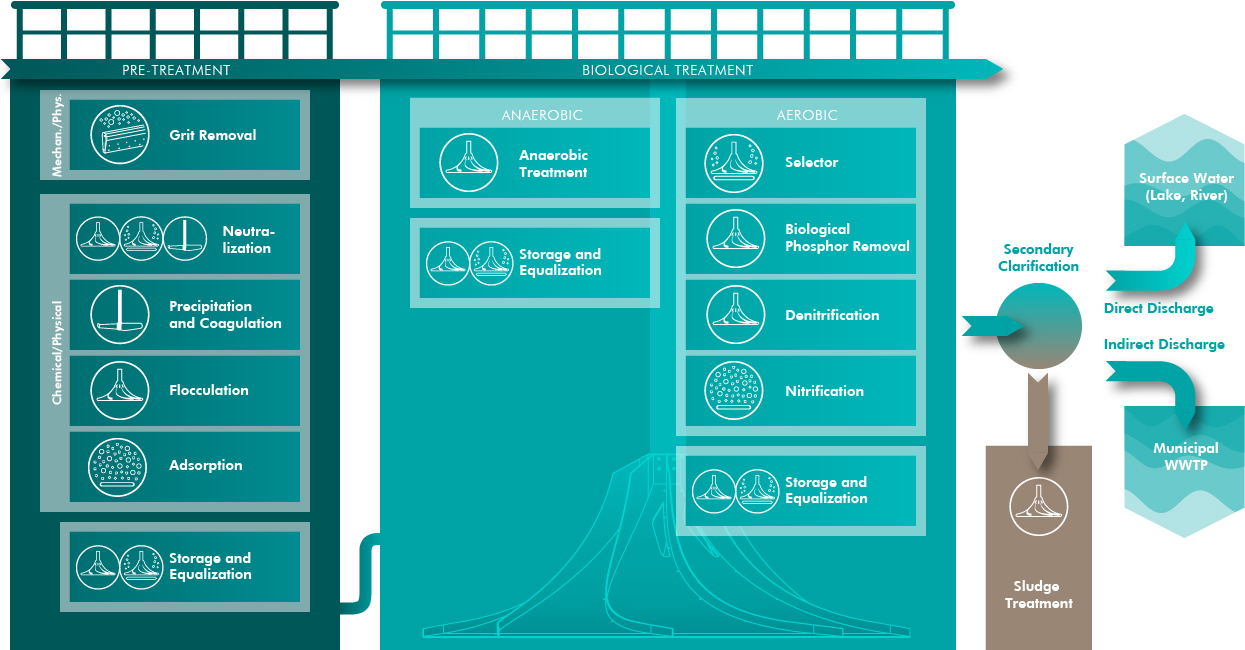
Depending on the product and production process (discontinuous/discontinuous syntheses), the requirements for wastewater treatment are very different and can fluctuate. Water is used in the pharmaceutical industry as a solvent or raw material, for transporting heat, for cleaning products or for rinsing reaction vessels. For this reason, the resulting waste water can be contaminated with high amounts of impurities in dissolved and undissolved form.
Despite the different compositions of the effluents, all effluent treatments have a biological stage followed by treatment and disposal of the resulting sludge. In order to maintain the function of the microorganisms, the wastewater must be individually pre-treated with special processes (e.g. ultrafiltration, reverse osmosis, ozonation, UV radiation). Depending on the production, the waste water can contain corrosive, abrasive as well as greasy/oily components. In addition, high temperatures and explosion protection requirements can play an important role. In some cases, not all active ingredients can be degraded in the biological stage and additional procedures are required to eliminate trace substances. Due to this variety of requirements, detailed and long-standing experience is necessary for the selection of suitable machine technology.