Transforming lagoon performance at the Rupert WWTP: A successful retrofit with INVENT Floating Mixing and Aeration Systems
The City of Rupert, Idaho, transformed its aging pre-aeration lagoon system to deliver improved treatment performance and reliable odor control, without sacrificing the value of its existing infrastructure. The HYPERCLASSIC®-Mixing and Aeration System provides powerful, integrated mixing and aeration within the existing lagoon basins, maximizing treatment efficiency while bringing new performance and flexibility to an established system.
Aeration is essential in lagoon wastewater treatment because it supplies oxygen that allows beneficial microorganisms to break down organic pollutants efficiently. Historically, lagoon systems relied on either surface aerators or membrane diffusers. Surface aerators often provide insufficient mixing and lower oxygen transfer efficiency, while membrane systems require excessive air input to maintain solids suspension. The floating mixing and aeration technology addresses both limitations by decoupling mixing and aeration while maintaining high efficiency.

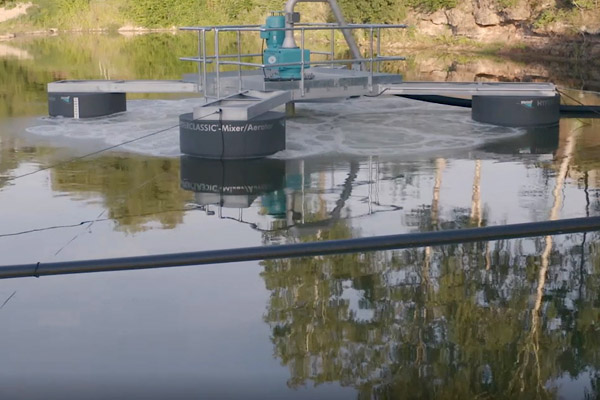
Figure 1: Floating HYPERCLASSIC®-Mixing and Aeration Systems in operation
Project Background and Design Drivers
The Rupert WWTP operates lagoon-based biological treatment and required upgrades due to high COD loading limitations, persistent odor concerns, and failing equipment. These issues were compounded by site-specific constraints, including an existing lagoon liner of unknown condition and the need for a rapid, minimally invasive upgrade.
From a design standpoint, the system needed to accommodate relatively high industrial loading while maintaining process stability. The lagoons operate at volumes of approximately 3.05 and 3.42 MG with a depth of about 10 ft and MLSS concentrations ranging from 3,500 to 12,000 mg/L. The design oxygen demand was approximately 396 lb O₂/hr with a target dissolved oxygen concentration of 2.0 mg/L.
These combined drivers required a solution that could provide reliable mixing, efficient oxygen transfer, low maintenance requirements, and operational flexibility without compromising the existing lagoon infrastructure.

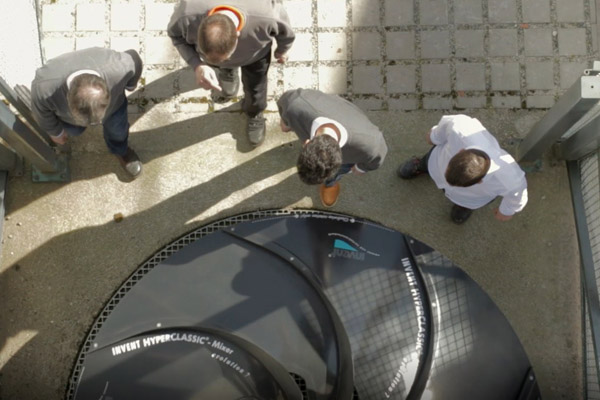
Figure 2: Floating HYPERCLASSIC®-Mixing and Aeration Systems in operation
Floating Mixing/Aeration Technology and Performance
The floating HYPERCLASSIC®-Mixing and Aeration System is a combined mixing and aeration system designed specifically for lagoon applications. The system is supported by a floating platform that is anchored via mooring. Process air is delivered through a floating air pipe, conveyed through the hollow shaft and discharged through engineered openings in the mixer body, where it is finely dispersed by integrated shear fins.
The hyperboloid geometry is fundamental to system performance. As the mixer rotates, it generates a strong radial bottom flow. This flow ensures complete suspension of solids while simultaneously distributing oxygen throughout the lagoon. The interaction between mechanical mixing energy and introduced air results in efficient bubble dispersion, improved oxygen transfer, and uniform dissolved oxygen concentrations.
The INVENT mixer/aerator decouples mixing from aeration. This allows the system to operate in either mixing-only mode or combined mixing and aeration mode, depending on process requirements. This flexibility improves process control, reduces energy consumption, and enables the creation of anoxic zones when desired.

Figure 3: The floating INVENT HYPERCLASSIC®-Mixing and Aeration System
From a process standpoint, the system promotes complete homogenization, eliminates dead zones, and maximizes contact between biomass and substrate. The resulting improvement in biological activity supports more stable treatment performance. Additionally, the system can generate a “virtual wall effect,” thus producing controlled flow patterns without physical baffles, which is particularly advantageous in rectangular lagoon configurations to save in capital costs.
Mechanically, the system is designed for durability and low maintenance. The drive unit is mounted above the water surface, eliminating submerged maintenance and mechanical components. The hyperboloid mixer body is inherently non-clogging and resistant to fouling, and the system maintains consistent efficiency across a wide range of wastewater conditions. The smooth, continuous geometry eliminates the catch points, discontinuities, and protrusions where rags and debris commonly accumulate on conventional mixing equipment. These characteristics contribute to long service life and reduced operational complexity.

Figure 4: Working principle of the floating HYPERCLASSIC®-Mixing and Aeration System
Rupert System Design and Installation
The Rupert installation consists of 16 variable frequency drive (VFD) controlled floating Mixer/Aerator units, with eight units installed in each lagoon basin. The system was designed to meet peak loading conditions, ensuring sufficient mixing energy to transport solids and oxygen throughout the entire basin volume.
Mixer speeds vary depending on operating mode, with lower speeds used for mixing-only operation and higher speeds for combined mixing and aeration. This configuration allows the system to adapt to changing loading conditions while maintaining process stability and saving energy.
The installation methodology leveraged the advantages of the floating design. Units were assembled onshore, lifted into the lagoon, positioned, and anchored using mooring systems. Air supply and electrical connections were then completed prior to startup. This approach minimized in-water construction activities, created a safe place for maintenance, and avoided disturbance to the existing lagoon liner, an important project constraint. The installation process is inherently efficient and reduces overall construction risk compared to fixed or submerged systems.

Figure 5: 4 out of 16 floating HYPERCLASSIC®-Mixing and Aeration Systems before start-up
Conclusion
The floating HYPERCLASSIC®-Mixing and Aeration System provided a cost effective and adaptable solution for the Rupert WWTP pre-aeration lagoon upgrade. The increase in oxygen transfer efficiency allowed for the City to increase their load capacity by 74%. By integrating mixing and aeration into a single floating platform, the system addressed key operational challenges while preserving existing infrastructure.
The technology delivers improved mixing, enhanced oxygen transfer, reduced maintenance, and flexible operation under varying loading conditions. The Rupert installation demonstrates the next evolution in lagoon treatment, highlighting the advantages of this approach for lagoon-based systems and its applicability for facilities seeking efficient and reliable upgrades while reducing overall capital infrastructure costs